Watching My First Unscripted Videos Back, and What I Noticed
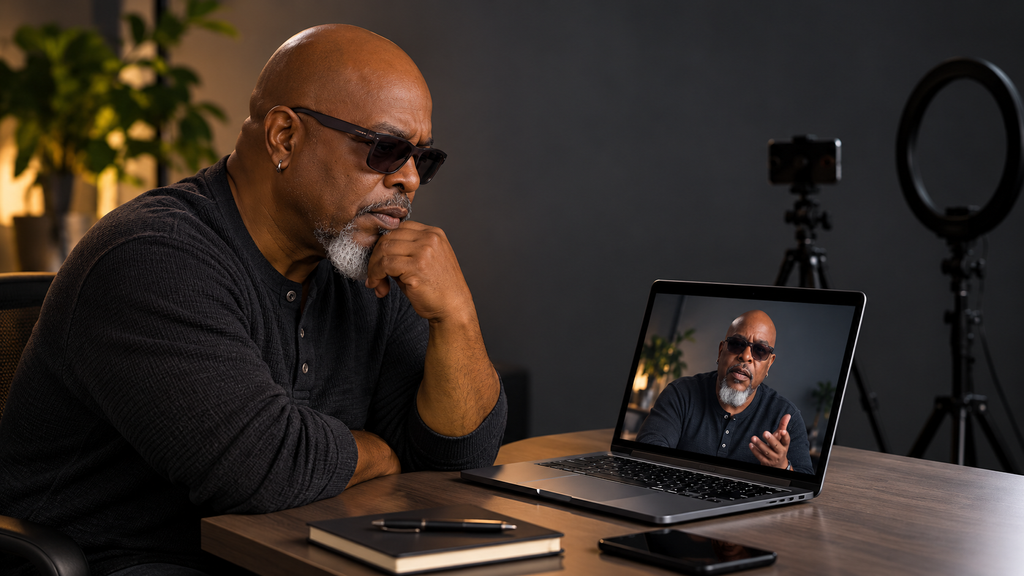
I almost didn’t press play. Recording three short videos without a script felt like a win on its own, and part of me wanted to leave it there. Watching them meant hearing every pause and seeing every moment a sentence fell apart. But this whole lane is about learning to say what I mean out loud, and I can’t fix what I won’t look at. So I hit play on the first one and made myself watch all three, start to finish.
What I Tried
The setup was simple. I filmed three videos without a script, talking straight to the camera. I went in knowing how I wanted to open each one, and nothing else. There were no notes or bullet points to lean on once that first line was out of my mouth. After all three were done, I watched them back to see what someone on the other side of the screen would see and hear. I wasn’t grading views or likes. I was grading the person doing the talking.
What Happened
The first thing I noticed was the stumbling. I tripped over words. There were gaps between sentences, the kind where you can tell someone is searching for what comes next. And there was hesitation, those little moments before a thought where I clearly wasn’t sure where it was headed. It felt like my mind couldn’t put clear thoughts together fast enough. That’s a strange thing to watch yourself do.
The second thing surprised me more. From the first video to the third, my confidence grew. That part was easy to spot. But the stumbles didn’t go anywhere. They stayed about the same from the first video to the last. So feeling more comfortable didn’t make me any clearer.
That left me with a question I couldn’t shake. Before any of this, I was an IT instructor, and I rarely struggled presenting. I explained things to rooms full of people, and the words came. So why does a camera with nobody behind it turn me into someone who stumbles, pauses, and hesitates? I honestly don’t fully understand it yet.
What I Learned
When I compared the classroom to the camera, three things were different. First, I had more self-confidence in the classroom. Second, I had true knowledge of what I was teaching. In these videos, I was talking about something I’d had to ask for help just to understand. It’s hard to speak smoothly about a topic you’re still learning yourself. That one’s on me, and it’s fixable.
The third difference is the one I keep coming back to. In a classroom, I was talking with people who wanted what I had to offer. A room tells you whether you’re landing, even when nobody says a word. The camera gives nothing back. There’s no face telling me the point made it, and no confused look telling me it didn’t. I’m talking into silence and hoping something sticks.
Feeling better on camera and speaking clearly on camera are not the same skill.
What I’m Trying Next
Next, I’m going to count. Specifically, I’m going to count my filler words, the “um” and “uh” kind that fill the gaps while my brain catches up. I haven’t counted them yet, so I don’t know how many there are. That’s the point. Right now all I have is a feeling that there are a lot, and a feeling isn’t something I can work on. A number is.
I’m also going to keep watching my videos back, even when I’d rather not. It’s uncomfortable, but until more people start talking back, it’s the only feedback I’ve got. So the camera won’t tell me how I’m doing. The playback will, if I’m willing to watch it.
So here’s my question for you. When you explain something and it doesn’t land, how do you find out? Do you have someone who tells you, or are you talking into silence too?
R.L. Canty │ Ronnie Canty, LLC