

The Provider and the Charmer stayed busy to avoid saying the real thing. The Strategist and the Peacekeeper do something quieter but just as effective. They manage the conversation itself, steering it, softening it, calculating it, until the actual thing they meant to say never quite makes it into the room. Both of them are talking. Neither one is being fully honest about what the talking is for.
Where We Left Off
Two posts ago, the Wall and the Ghost went quiet to protect themselves. Last time, the Provider and the Charmer stayed busy for the same reason. This time the pattern shows up as control. The Strategist controls the conversation by planning it in advance. The Peacekeeper controls it by absorbing whatever tension shows up before it can spread. Different tools, same job. Keep the real thing contained.
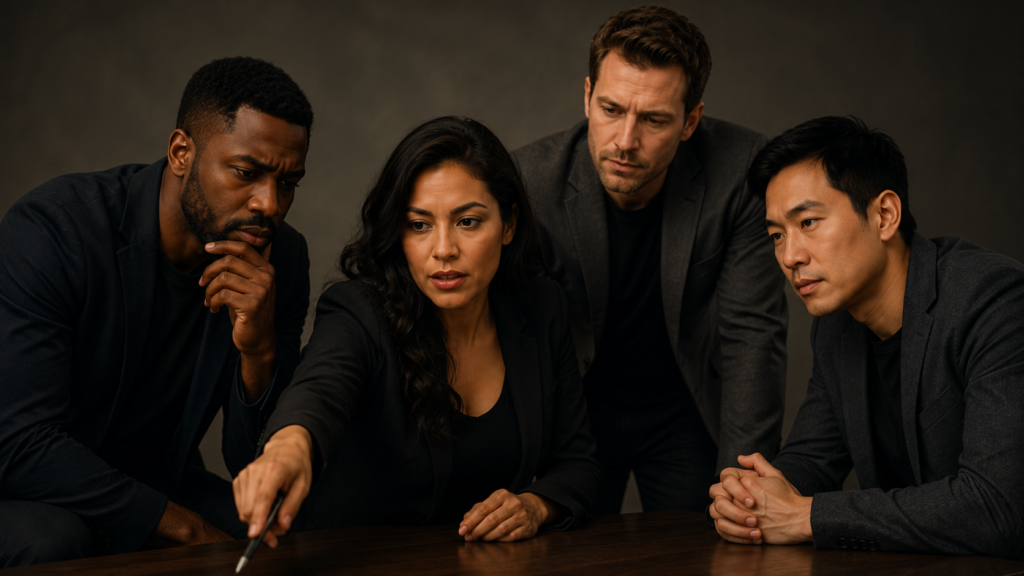
The Strategist
The Strategist walks into every conversation with a plan. He has already thought through what he wants to say, what the other person might say back, and three ways to redirect if the conversation drifts somewhere he did not intend. This is not always a bad instinct. Some conversations genuinely benefit from preparation, and a man who thinks before he speaks is usually easier to deal with than one who does not.
I spent years as a police lieutenant, and later managing a sales team, and both jobs rewarded this instinct heavily. You learn to read a room before you enter it, to anticipate the objection before it is raised, to have your response ready before the other person finishes their sentence. That training kept me effective at work. It also followed me home, where the people closest to me did not need a lieutenant managing the conversation. They needed a man willing to enter it without a script.
What the Strategist Is Actually Avoiding
The Strategist’s planning looks like preparation, but underneath it is often something closer to fear. If he can map the conversation in advance, he can control how exposed he gets. He can choose his words carefully enough that nothing slips out that he did not intend to say. The cost is that genuine conversation requires a little bit of not knowing what is going to happen next, and the Strategist has built a system specifically designed to eliminate that uncertainty.
This shows up most clearly in moments that call for spontaneity, an apology that needs to come out messy and immediate, a compliment that needs to be said before the moment passes, a confession that loses its power if it gets rehearsed first. The Strategist often misses these moments entirely, not because he does not feel the impulse, but because the impulse arrives without a plan attached, and he has trained himself to distrust anything that shows up that way.
I still catch myself doing this in conversations that have nothing to do with strategy at all. Someone will ask me a simple question about how I am doing, and I notice the instinct to calculate the answer instead of just saying it. That instinct served me well running a shift or closing a deal. It does not serve the people who just want to know how I actually am, and learning to shut it off on purpose has been some of the harder work of the last few years.

The Peacekeeper
The Peacekeeper takes a different approach to the same underlying goal. Where the Strategist manages the conversation through preparation, the Peacekeeper manages it through concession. He is the one who apologizes first, even when the disagreement was not his fault. He is the one who changes the subject the moment voices start to rise. He has decided, somewhere along the way, that keeping the peace is his job, and he performs that job with real skill.
The trouble is that peace built entirely on one person’s concessions is not peace. It is postponement. The Peacekeeper absorbs friction that was never actually resolved, just redirected, and it does not disappear. It accumulates somewhere underneath the calm surface he has worked so hard to maintain, waiting for a moment when there is finally too much of it to keep swallowing quietly.
What the Peacekeeper Is Actually Avoiding
Underneath the Peacekeeper’s constant smoothing is a fear that conflict itself is dangerous, that disagreement will cost him something he cannot afford to lose. That fear often has a real origin, a household where conflict genuinely was dangerous, a relationship where disagreement genuinely did lead to loss. The Peacekeeper learned his lesson honestly. The problem is that the lesson has outlived the situation that taught it to him, and he is still protecting himself from a threat that is not currently in the room.
This produces a man who is agreeable on the surface and quietly resentful underneath, because agreement that is not actually chosen is not agreement. It is surrender dressed up as harmony. The people closest to him often sense that something is being held back, even when they cannot name what it is, because the Peacekeeper’s calm has a slight strain to it that genuine ease does not carry.
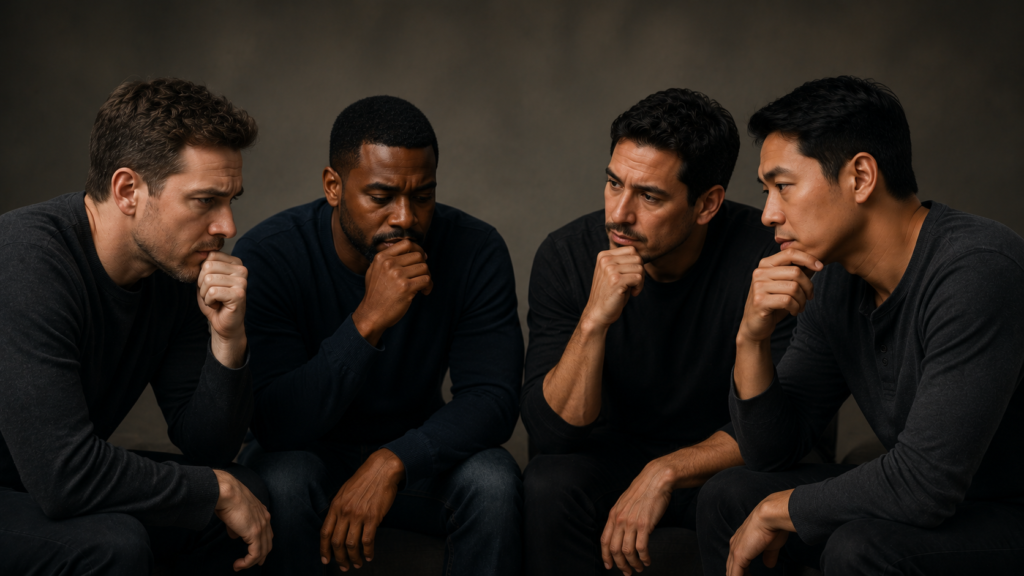
The Shared Habit Underneath
The Strategist and the Peacekeeper look like opposites. One over-prepares. The other over-yields. But both of them are managing the conversation instead of actually being present inside it. Both have decided that the safest way to communicate is to control the outcome in advance, either through calculation or through concession, rather than showing up honestly and letting the conversation go wherever it actually needs to go.
This is worth naming plainly. Preparation is not the enemy. Neither is a genuine desire for peace. Both are good instincts that have been pushed past their useful limit, until the instinct itself became a way of avoiding the very connection it was originally meant to protect.
What Real Communication Sounds Like
Real communication tolerates not knowing what happens next. It allows a plan to fall apart mid-sentence because something more honest showed up instead. It allows disagreement to exist in the room without either person needing to fix it immediately, because some tension is not actually dangerous, it is just uncomfortable, and those are two different things the Strategist and the Peacekeeper have both learned to treat as the same.
Letting go of the plan and letting go of the constant concession both require the same underlying trust, that the relationship can survive an unscripted moment, that disagreement will not automatically become disaster. That trust has to be built the same way anything else gets built, one honest and slightly uncomfortable conversation at a time.
Neither the Strategist nor the Peacekeeper has to abandon what makes him useful. A man who thinks ahead is valuable. A man who genuinely wants harmony is valuable too. What both of them need is the willingness to let the plan fail sometimes, and the willingness to let a disagreement sit in the room a little longer than feels comfortable, long enough for something true to actually get said instead of managed.

Where This Series Goes Next
The Strategist and the Peacekeeper join the Wall, the Ghost, the Provider, and the Charmer as four more ways men have learned to manage connection instead of actually having it. Each one looks different on the outside. All of them are protecting the same thing, the fear of what might happen if the real, unscripted version of the conversation were allowed to happen instead. If you saw yourself in either archetype today, that is not a flaw to fix overnight. It is a pattern worth noticing the next time you feel yourself reaching for the script or reaching to smooth something over before it has even been said.
Ronnie Canty | Ronnie Canty, LLC